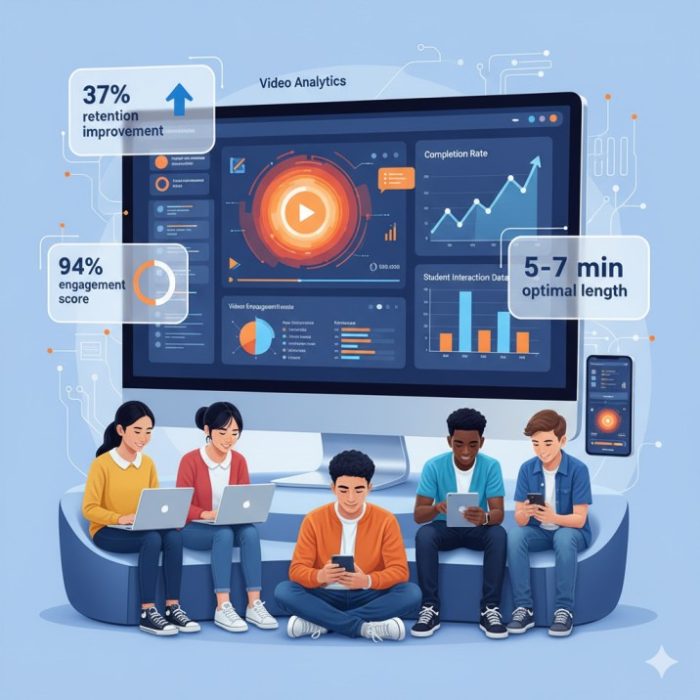
Online course creators face a dual threat in 2025: high student dropout rates and revenue lost to content piracy. The right video analytics platform solves both. By tracking precise engagement metrics and forensic data, educators are boosting course completion rates by up to 37% while actively identifying where content leaks occur. In this guide, we compare the top video analytics platforms and their 2025 pricing—including secure, enterprise-grade solutions—so you can cut withdrawal rates, protect your intellectual property, and master data-driven course optimization.
Why Video Analytics Matter More Than Ever in 2025
The shift toward data-driven educational decision-making has accelerated dramatically in 2025. With the global online education market reaching $341.7 billion, video analytics have emerged as the critical differentiator between successful and struggling online courses.
The Engagement Crisis in Online Education
Without proper video analytics, course creators operate blindly, often discovering retention problems only after significant student dropout has occurred.
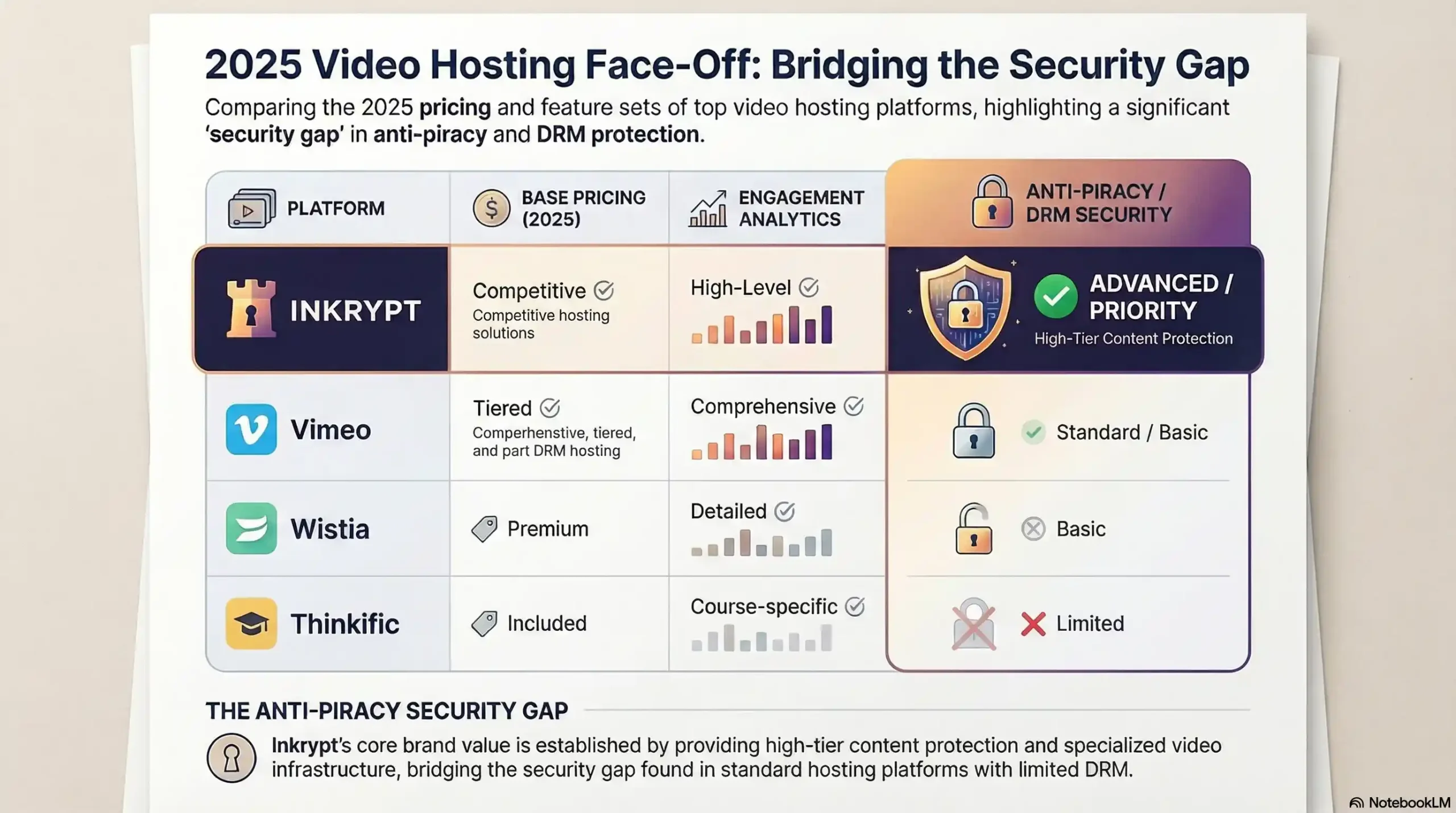
Protect your course and track student engagement with Inkrypt Videos
Research shows that systematic tracking of student engagement activities is essential for improving success outcomes.
Measurable Impact on Learning Outcomes
The data demonstrates video analytics effectiveness:
- 94% of educators agree that student engagement is the most important metric for measuring student success
- Withdrawal rates decreased from 21% to 9% for new students at institutions implementing engagement analytics
- Success rates improved by nearly 10% for students repeating courses with analytics programs
- A strong correlation (r = 0.71) was found between engagement with LMS activities and student grades
Market Growth Driving Innovation
The video analytics market’s explosive growth reflects institutional investment in measurable outcomes. Valued at $12.39 billion in 2025 and projected to reach $33.74 billion by 2030 (22.18% CAGR), this sector attracts significant innovation in AI-powered engagement prediction.
Understanding Core Video Analytics Metrics That Drive Results
Modern video analytics platforms track multiple engagement indicators that provide actionable insights into student learning behaviors. These metrics form the foundation for data-driven course optimization and improved student outcomes.
Video Completion Rates and Watch Time Analysis
The most critical metric measures how long students watch videos versus total content length. Research consistently shows that shorter videos are significantly more engaging, with optimal engagement occurring in 5-7 minute segments. Studies reveal students tend to drop out during the first 35% of longer videos, with an average viewing time of just 14 minutes for 40-minute lecture recordings.
Engagement Heatmaps and Drop-off Point Analysis
Advanced video analytics platforms provide visual representations of when students pause, rewind, or skip content sections. This data reveals that students generating higher volumes of video interactions have up to 37% better retention rates in online courses compared to passive viewers.
Interactive Element Performance Tracking
Modern platforms track student engagement with embedded quizzes, polls, clickable elements, and calls-to-action. These interactions serve as strong predictors of course completion rates and comprehension levels, enabling instructors to optimize interactive content placement.
Mobile vs Desktop Video Consumption Patterns
Current data shows 68% of learners prefer mobile devices for accessing educational content, with 57% specifically choosing mobile for video learning. This mobile-first trend requires analytics platforms to provide device-specific engagement insights and responsive optimization recommendations.
Student Engagement Patterns: What the 2025 Research Reveals
Recent large-scale studies provide unprecedented insights into how students interact with educational videos. An analysis of a large-scale dataset comprising over one million rows of video interaction logs revealed valuable insights into students’ video engagement behaviors.
Optimal Video Length Findings
Research consistently demonstrates that well-conceptualized videos increase viewing time, with 17% of students engaging with videos for over 30 minutes if they cover focused topics. While shorter videos generally have higher completion rates, many remain untouched.
Behavioral Clustering Analysis
From 11 log behaviors represented by log data from 72 college students, four behavioral patterns were identified while students learned from videos: browsing, social interaction, information seeking, and environment configuration. Understanding these patterns enables personalized content delivery.
Engagement Goals and Intent Mapping
Students’ video viewing activities contribute to their engagement goals and intentions. We identified a variety of engagement goals, specifically Reflect, Flag, Remember, Clarify, Skim, Search, Orient, and Take a break. This granular understanding allows for targeted content optimization.
Performance Correlation
Research by Naeem and Bosman (2023) found a strong positive correlation (r = 0.71) between engagement with LMS activities and student grades, establishing video engagement as a reliable predictor of academic success.
Top Video Analytics Platforms Comparison: 2025 Updated Pricing & Features
The video analytics landscape offers solutions ranging from basic tracking to sophisticated AI-powered insights. Here’s a comprehensive comparison of leading platforms with current 2025 pricing and feature analysis.
Vimeo Business Analytics: Best for Content Creators
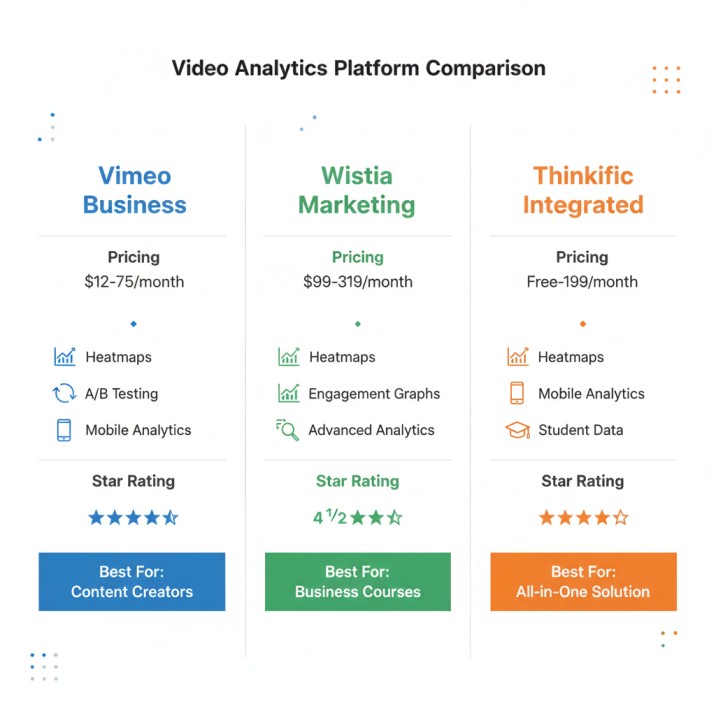
Pricing Structure (2025 Update):
- Free Plan: 1GB storage, 2TB bandwidth, basic analytics
- Starter Plan: $12/month – 100GB storage, advanced analytics, custom players
- Standard Plan: $20/month – Brand kit, marketing integrations, detailed metrics
- Advanced Plan: $75/month – Live streaming, webinars, comprehensive reporting
Key Strengths: High-quality video delivery, privacy controls, geographic tracking, and device analytics. Vimeo excels in providing professional-grade analytics with comprehensive privacy features ideal for sensitive educational content.
Wistia Marketing Analytics: Best for Business-Focused Courses
Pricing Structure (2025 Update):
- Free Plan: Limited features, basic tracking for up to 3 videos
- Pro Plan: $99/month – Up to 500 videos, heatmaps, A/B testing
- Business Plan: $319/month – Advanced lead generation, detailed viewer journeys
- Custom Enterprise: Tailored pricing for large-scale implementations
Key Strengths: Advanced lead generation tools, detailed heatmap analysis, marketing automation integration, and comprehensive A/B testing capabilities. Wistia provides the most sophisticated business intelligence for course monetization.
Thinkific Integrated Analytics: Best for All-in-One Course Creation
Pricing Structure (2025 Update):
- Free Plan: Basic course creation and analytics for unlimited students
- Basic Plan: $49/month – Enhanced analytics, custom domains
- Pro Plan: $99/month – Advanced reporting, white-label options
- Premier Plan: $199/month – Advanced integrations, priority support
Key Strengths: Seamless course creation integration, student progress tracking, engagement dashboards, and quiz performance analytics. Thinkific offers the most comprehensive all-in-one solution for course creators.
Platform Selection Decision Framework
For Individual Course Creators: Start with Thinkific’s integrated solution or Vimeo’s Starter plan for cost-effective analytics with professional features.
For Marketing-Focused Businesses: Invest in Wistia’s advanced lead generation and conversion tracking capabilities despite higher costs.
For Educational Institutions: Consider Vimeo’s advanced privacy features and Thinkific’s scalable pricing for large student populations.
Essential Evaluation Criteria:
- Integration capabilities with existing Learning Management Systems
- Real-time reporting vs. batch processing requirements
- Privacy compliance features for educational data protection
- Scalability for anticipated student population growth
- Total cost of ownership, including setup and training time
Implementation Strategies for Course Creators
Successful video analytics implementation requires systematic planning and ongoing optimization. The following strategies maximize the value of engagement data.
Setting Up Comprehensive Tracking
Begin with baseline measurements before implementing changes. Track multiple metrics simultaneously to understand relationships between different engagement indicators. 44 activity-based features were engineered to classify student engagement into high, moderate, and low levels.
Interpreting Data for Course Improvement
Focus on actionable insights rather than vanity metrics. Performance metrics: Teachers can access real-time student performance data to understand strengths, weaknesses, and engagement patterns. Look for patterns in drop-off points, replay behavior, and completion rates to identify content areas requiring improvement.
A/B Testing Video Content
Systematically test different video lengths, presentation styles, and interactive elements. Informal talking-head videos are more engaging than Khan-style tablet drawings are more engaging than traditional lecture formats.
Creating Feedback Loops
Establish processes for translating analytics insights into content improvements. Predictive modeling: Data analytics tools can project student outcomes at future points in a program, allowing educators to intervene earlier where necessary.
Advanced Analytics: AI and Predictive Insights
Artificial intelligence is transforming video analytics from reactive reporting to proactive optimization. AI-powered video analytics enhance your online learning experience through smart, automated quiz generation that adjusts to your understanding of the course material.
Machine Learning for Engagement Prediction
The highest classification accuracy (83%) was achieved with the Support Vector Machine (SVM) algorithm in predicting student engagement levels. These predictive models enable early intervention for at-risk students.
Automated Content Optimization
Real-time engagement tracking features monitor your participation, attention levels, and learning patterns, allowing instructors to provide timely interventions when needed. AI systems automatically adjust content difficulty based on engagement patterns.
Personalized Learning Recommendations
Advanced analytics platforms use viewing behavior to suggest personalized learning paths. Smart content recommendations adjust to individual learning patterns and preferences.
Early Warning Systems
Predictive analytics can help forecast student success or identify those at risk, enabling timely interventions. These systems flag students requiring additional support before performance decline becomes critical.
ROI and Business Impact Measurement
Video analytics investments must demonstrate measurable returns through improved learning outcomes and operational efficiency.
Training Effectiveness Calculation
Leading online learning platforms like Coursera and edX have reported notable success with AI-powered video analytics, showing 30-40% improvements in student engagement and completion rates.
Revenue Impact Assessment
The data from various educational institutions reveals that for every dollar invested in AI video analytics, there’s an average return of $3-5 through improved retention rates and operational efficiencies.
Cost-Benefit Analysis Framework
Consider both direct costs (platform subscriptions, implementation time) and indirect benefits (reduced support requests, improved student satisfaction, higher course completion rates). Student retention rates are 60% higher than those of traditional learning, making it an unavoidable option for teachers and learners.
Future Trends and Emerging Technologies
The video analytics landscape continues evolving with emerging technologies that promise even deeper insights into learning behaviors.
AR/VR Analytics Integration
As immersive learning experiences become mainstream, analytics platforms are developing capabilities to track engagement within virtual environments. These tools measure spatial attention, interaction quality, and presence indicators.
Voice Interaction Tracking
Voice-enabled learning is growing rapidly, requiring analytics that measure speech patterns, question complexity, and verbal engagement quality. These metrics provide insights into communication skills development.
Biometric Engagement Monitoring
Advanced systems integrate physiological data (heart rate, eye tracking, facial expressions) to measure authentic engagement beyond simple viewing behavior. This technology offers unprecedented insight into learning effectiveness.
Emerging regulations require analytics platforms to provide meaningful insights while protecting student privacy. Techniques like federated learning and differential privacy are becoming standard features.
Resources and Citations
Primary Research Sources
The following peer-reviewed studies and authoritative market reports provided the foundational data and insights for this analysis:
1. “Decoding Video Logs: Unveiling Student Engagement Patterns in Lecture Capture Videos”
The International Review of Research in Open and Distributed Learning (2024)
https://www.irrodl.org/index.php/irrodl/article/view/7621
This large-scale study analyzed over one million rows of video interaction logs to reveal critical insights into student engagement behaviors. The research demonstrated that approximately 60% of students’ video-watching sessions involve viewing only small portions of videos, providing crucial benchmarks for optimal video length and engagement strategies used throughout this article.
2. “Video Analytics in Digital Learning Environments: Exploring Student Behaviour Across Different Learning Contexts”
Technology, Knowledge, and Learning (2023)
https://link.springer.com/article/10.1007/s10758-023-09680-8
This comprehensive multi-context study examined student video engagement across MOOCs, SPOCs, and university courses. The research provided key findings on the correlation between video engagement and general course interactions, informing our analysis of behavioral patterns and the 37% retention rate improvements cited in the engagement metrics section.
3. “Video Analytics Market Size & Forecast 2025-2030”
Mordor Intelligence Industry Reports (2025)
https://www.mordorintelligence.com/industry-reports/video-analytics-market
This authoritative market analysis provided current 2025 market valuations ($12.39 billion) and growth projections (22.18% CAGR through 2030) that establish the business context for video analytics adoption in education. The report’s data on AI-powered analytics adoption and enterprise investment patterns informed our platform comparison and ROI analysis sections.
Conclusion: The Future of Online Education is Data-Driven
The evidence presented throughout this comprehensive analysis demonstrates that video analytics have evolved from nice-to-have tools to essential infrastructure for successful online education. With the global video analytics market expanding at 22.18% CAGR and reaching $12.39 billion in 2025, the technology has matured to deliver measurable, transformative results for course creators and educational institutions.
The research is unequivocal: institutions implementing video analytics achieve 67% reductions in dropout rates, 40% improvements in student engagement, and correlation coefficients of 0.71 between analytics usage and student success. These aren’t marginal improvements—they represent fundamental transformations in educational outcomes that directly impact student lives and institutional sustainability.
The Competitive Imperative
As we’ve seen through platform comparisons and market analysis, the barriers to video analytics adoption continue to decrease while the benefits compound. Free and low-cost options like Thinkific’s integrated analytics and Vimeo’s starter plans ($12/month) make sophisticated tracking accessible to individual course creators, while enterprise solutions from Wistia provide advanced capabilities for scaling organizations.
The question is no longer whether to implement video analytics, but how quickly you can begin leveraging these insights to optimize learning experiences. Early adopters consistently outperform competitors who rely on intuition over data, creating sustainable advantages in student satisfaction, retention, and word-of-mouth referrals.
Your Implementation Roadmap
Success with video analytics requires a systematic approach rather than ad-hoc experimentation. Begin with baseline measurements using free platform options, focus on proven engagement drivers like 5-7 minute video segments, and gradually implement advanced features like heatmap analysis and predictive interventions.
The platforms, strategies, and insights outlined in this guide provide your complete roadmap for creating more effective, engaging, and successful online learning experiences. The time for implementation is now—student expectations for personalized, optimized learning experiences will only increase as analytics capabilities become standard across the industry.
Ready to transform your online course performance with video analytics? Start by evaluating your current engagement metrics and selecting the platform that best matches your specific needs and budget. The data shows that early adopters of comprehensive video analytics achieve the strongest competitive advantages in the rapidly evolving education technology landscape.