Stop losing course revenue to credential sharing and piracy without blocking student access. By integrating Hollywood-grade DRM with forensic watermarking, you can provide seamless multi-device playback while ensuring your content remains uncopiable and traceable to the source. This enterprise-grade security setup takes less than 30 minutes to deploy via standard WordPress plugins or APIs.
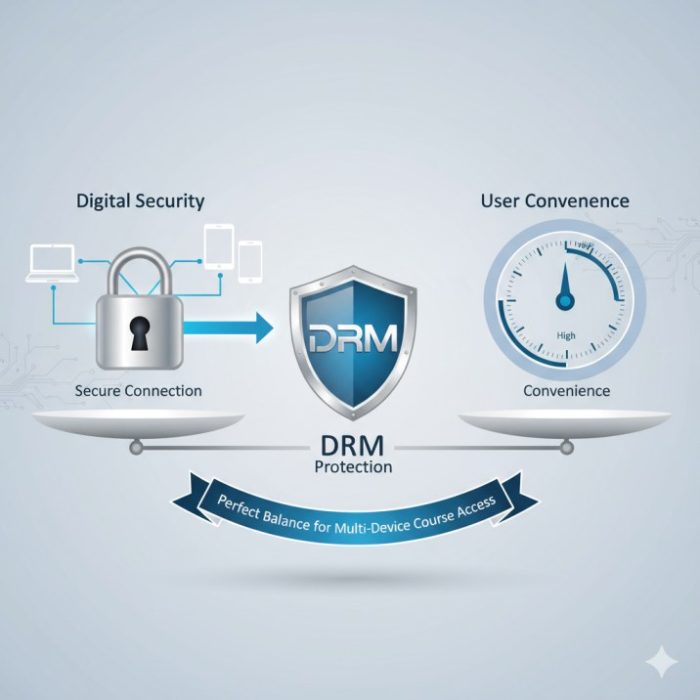
The Security-Convenience Balance for Multi-Device Course Access in 2025
Online course creators and educational coaches face a dilemma: they must offer students the convenience of multi-device access—allowing them to watch content on a laptop, tablet, or phone—while simultaneously protecting their intellectual property from theft and piracy. If the security is too restrictive, it frustrates the customer and damages the learning experience. If the access is too easy, your premium content ends up on torrent sites.
The solution lies in adopting real security for real creators, which means moving beyond fragile, false confidence solutions and implementing enterprise-grade security that maintains a seamless user experience. Here is a breakdown of how the right video hosting partner can provide uncompromising security without sacrificing global performance or universal compatibility.
1. Uncompromising Security: Ending Credential Sharing with DRM
One of the greatest threats to recurring revenue for course creators is login credential sharing. A single student account can be shared with dozens of people, essentially stealing your course. To solve this, you need security features that are paranoid about content protection in the best way possible:
Hollywood-Grade DRM Encryption: Digital Rights Management (DRM) is the fundamental layer of unbreakable content protection. Solutions like Google Widevine and Apple FairPlay are embedded into the video stream to ensure the video file cannot be downloaded in a usable form, preventing actual piracy, not just casual downloading.
Concurrent Login Control: To stop shared accounts, the video system must enforce strict device limits. This feature monitors the number of devices (e.g., a laptop, two phones) actively logged into a single user account. If a student tries to log in on a fourth device, the system automatically revokes access from the oldest device, eliminating the viability of sharing credentials for a monthly fee.
Geo-Restriction & IP Fencing: For creators selling in specific markets, the system can restrict course playback to predefined geographies or even specific IP addresses, providing an extra layer of protection for exclusive content.
2. Forensic Tracking: Tracing Leaks with Dynamic Watermarking
While DRM prevents most unauthorized downloading, the most aggressive pirates resort to screen recording. This is where a dynamic, forensic-grade tracking system is essential to protect high-value course content.
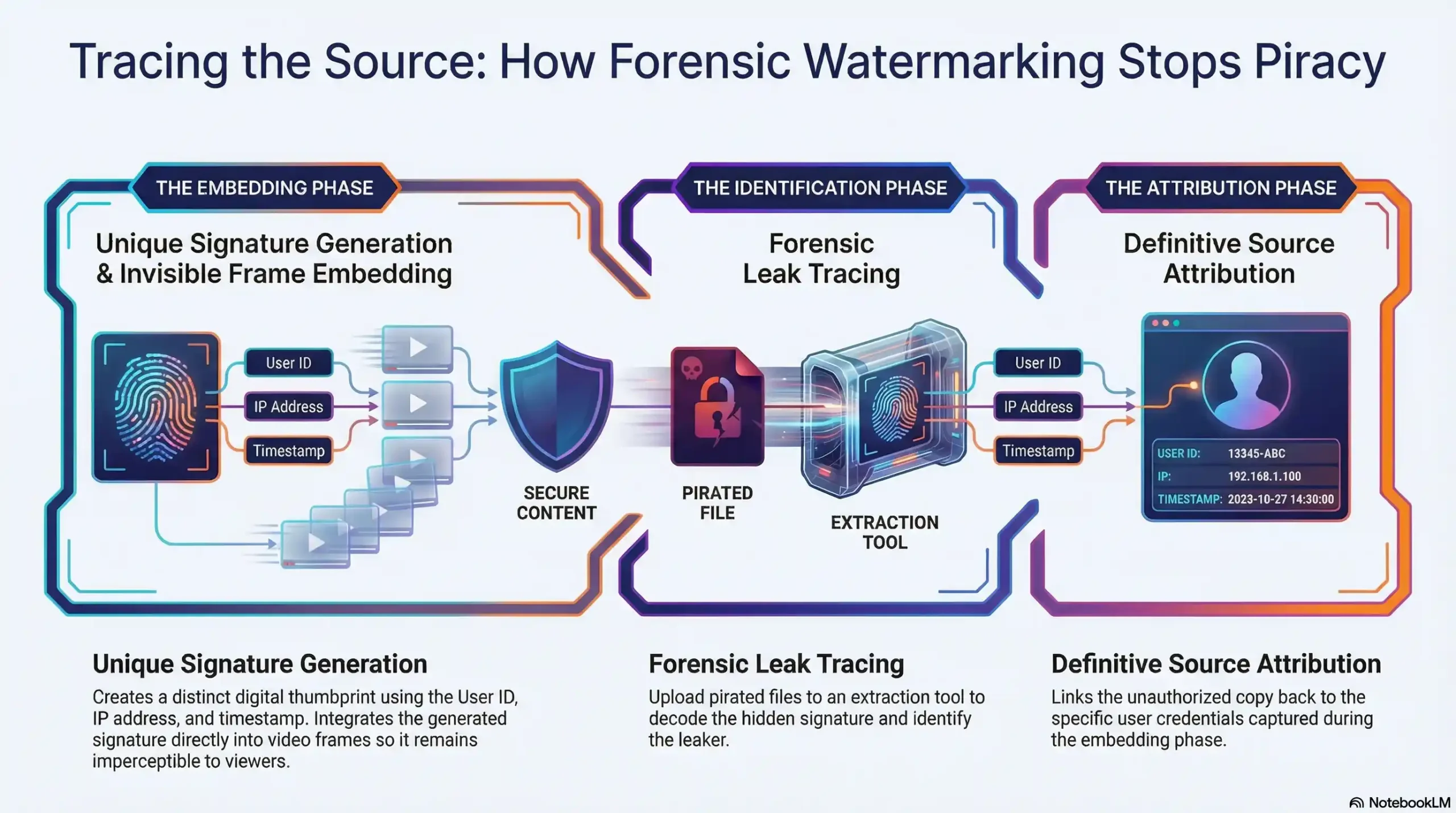
Forensic Watermarking works by dynamically embedding an invisible, unique fingerprint into the video stream for every single viewer.
How Inkrypt Videos’ Forensic Watermarking Traces Piracy to the Source
Unique Signature Generation: When a user clicks play, the system instantly generates a unique code (their user ID, IP address, and a timestamp) for that specific session.
Invisible Embedding: This unique code is then imperceptibly woven into the video frames. The watermark remains invisible to viewers and does not affect video quality.
Leak Tracing: If a screen-recorded copy of the content is later found online, the publisher can upload the pirated file to a forensic extraction tool. This tool quickly analyzes the video to retrieve the invisible code/fingerprint, instantly identifying the original student/account that leaked the content.
This system acts as a massive deterrent, as potential leakers know that any content theft can be traced directly back to their account, enabling prompt legal action.
3. Universal Compatibility: Making Security Seamless
Security is useless if it creates technical complexity for the creator or playback issues for the student. The solution must be performance-driven and easy to integrate:
Zero-Jargon Integration: Enterprise-level power does not need to mean enterprise-level complexity. Modern solutions offer a 30-minute integration via simple APIs and WordPress plugins, rather than the weeks or months of development required by traditional security providers.
Global, Zero-Buffering Performance: Security measures should never compromise delivery speed. By leveraging global Content Delivery Networks (CDNs) like Amazon CDN, the video content is distributed from the closest server to the student, guaranteeing zero buffering worldwide.
Universal Device Support: Your solution must ensure every student can access the course, regardless of their hardware. This includes providing universal compatibility for older devices often ignored by competitors, ensuring the professional learning experience is maintained for all users.
Schedule your 30-minute Revenue Protection Demo
By adopting a platform that combines multi-DRM encryption, forensic tracking, and global performance with an easy setup, course creators can focus on scaling their business while having peace of mind that their premium content is bulletproof.
Resources and Citations
The security protocols and strategic considerations for balancing content protection with user access were informed by research from the following external industry and technical authorities:
Digital Rights Management (DRM) Explained – Fortinet provides a comprehensive overview of how Digital Rights Management technology works, its purpose in preventing unauthorized distribution and modification of digital content, and its crucial role for content creators and copyright holders.
Video Watermarking – IEEE Xplore: An authoritative technical publication outlining advanced techniques, such as A/B watermarking, used for real-time video stream protection. It validates the goal of forensic watermarking: to trace unauthorized redistribution back to the source user.
Is cybersecurity incompatible with digital convenience? – McKinsey explores the fundamental challenge facing digital content providers: finding the balance between strong security measures and seamless user experience. It discusses tailoring security based on customer preference and risk segmentation.
Conclusion
The age of forcing course creators to choose between a convenient student experience and effective content protection is finally over. By implementing a modern video solution that seamlessly integrates multi-DRM encryption, concurrent login control, and forensic watermarking, you are not just building a simple paywall—you are making a critical investment in the long-term, scalable growth of your coaching business.
Real security for real creators means providing a flawless, universally accessible learning experience while simultaneously future-proofing your revenue against evolving piracy threats and putting an end to credential sharing and illegal downloads.
Ready to Protect Your Premium Content?
Stop losing revenue to shared logins and piracy today. Protect your intellectual property with the same unbreakable, forensic-grade security used by major media companies, made simple for online course creators.
Schedule your free 30-minute integration demo with Inkrypt Videos and start protecting your content immediately.