Table of Contents
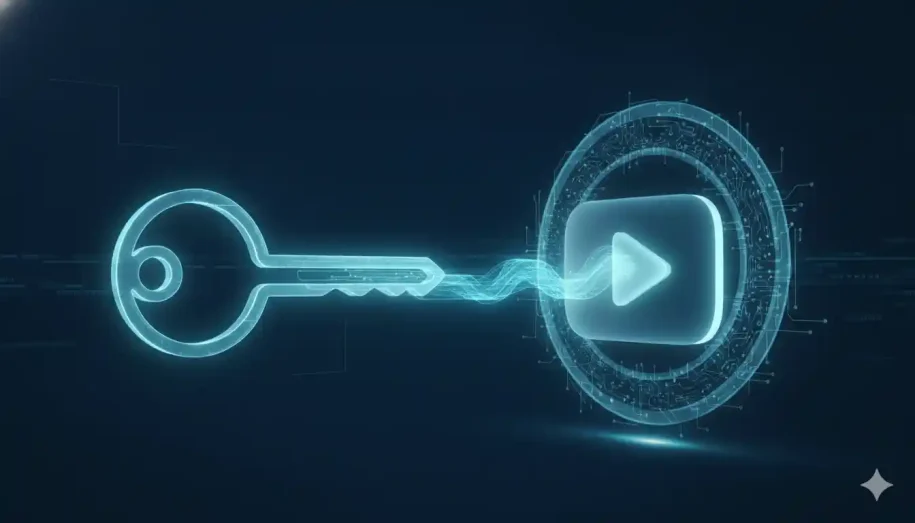
ToggleToken authentication for video streaming works by replacing a permanent video link with a temporary, cryptographically signed “token” that grants access for a single viewer, for a specific video, for a short window of time. When someone presses play, your server issues a signed token; the CDN checks that token’s signature, expiry, and permissions before delivering the stream. Once the token expires, the link stops working — so a leaked or shared URL becomes useless within minutes.
Here’s an uncomfortable truth most content owners never hear until it’s too late: the “private” video link inside your members area isn’t actually private. The moment that URL exists, it behaves like a permanent public key. Copy it, paste it into a group chat, hand it to a friend who never paid — and it plays. No login. No questions asked.
For course creators, that means one purchased seat quietly streaming to a study group of forty. For premium publishers, it means your subscriber-only masterclass surfacing on a Telegram channel. The leak is silent, and by the time you notice, the revenue is already gone.
Token authentication is the mechanism that closes this door. Below, we’ll walk through exactly how it works — in plain English first, then with the technical detail to back it up. No computer science degree required.
Why a “Private” Video Link Isn’t Actually Private
Before the fix makes sense, you need to see the flaw clearly.
The Static URL Problem
A standard video URL is static — it never changes and it never expires. Think of it as a house key that’s been copied a thousand times and works forever. Anyone holding that key walks right in. Because the link is permanent and portable, sharing it costs the sharer nothing and costs you everything. Worse, a static link can be extracted directly from a web page using nothing more than the browser’s built-in developer tools, then re-embedded on a piracy site or pasted into a forum.
The Real-World Leak Scenarios
The threats aren’t hypothetical. The enrolled student who shares a single login across a cohort. The subscriber who posts a “members-only” link in a Discord server. The competitor who scrapes your manifest URL and hotlinks your stream on their own page, leeching both your content and your bandwidth. In every case, the root weakness is identical: the link itself can be stolen and reused. Fix the link, and you fix the leak.
What Is Token Authentication?
Token authentication replaces that permanent house key with something far smarter.
The Hotel Keycard Analogy
Imagine checking into a hotel. You don’t get a master key that opens every room forever. You get a keycard programmed for your room, for your dates, and nobody else’s. When checkout passes, the card is dead — even if you keep it in your wallet.
A streaming token works the same way. Instead of a permanent link, each viewer receives a temporary, single-use credential that says: this person, this specific video, valid for the next few minutes. Share it after it expires, and the recipient gets nothing but an error.
Token vs. Password (The Key Distinction)
It’s easy to assume a login already solves this — but a password and a token do very different jobs. A password proves who you are at the moment you sign in. A token proves you are authorized to play this exact video, right now, for a strictly limited time. The password gets you through the front door; the token is what unlocks each individual video, briefly, and then disappears. That short lifespan is the entire point.
▶️ Curious how this looks in practice? Inkrypt builds token authentication into every stream by default — so your links protect themselves from day one.
How Token Authentication Works: The 4-Step Handshake
Underneath the simplicity is a fast, four-step exchange that happens in milliseconds every time someone presses play. Here’s the whole handshake.
Step 1 — The Viewer Requests the Video
A legitimate viewer logs into your platform and clicks play. Crucially, they never receive a raw, permanent video link. Instead, their request travels to your server — the gatekeeper — asking, in effect, “I’d like to watch this video, am I allowed?” Because the request flows through your authenticated application, you already know who they are and what they’ve paid for.
Step 2 — Your Server Generates a Signed Token
If the viewer checks out, your server mints a fresh token. In most modern systems this is a JSON Web Token (JWT) or an HMAC-SHA256 signed string. The server packs in a set of rules — which video, which viewer, an expiration timestamp, sometimes the viewer’s IP address — and then signs the whole package with a secret signing key that lives only on your server and is never exposed to the browser. That signature is what makes the token tamper-proof.
Step 3 — The CDN Validates the Token
The viewer’s player now sends that token to the content delivery network (CDN) — the global network of edge servers that actually delivers your video. Before serving a single byte, the CDN runs three checks: Is the signature intact (has anyone altered the token)? Is it still within its expiration window (has the short TTL, or time-to-live, lapsed)? And does it match this specific video and viewer (was it issued for this exact resource)? If any check fails, delivery is refused.
Step 4 — Playback Begins (or the Door Stays Shut)
Pass all three checks, and the stream flows instantly — the viewer never notices the handshake happened. Fail any one of them, and the link is dead on arrival. This is why a copied or shared tokenized URL is worthless to a pirate: by the time they try to reuse it, the token has almost always expired, and they can’t forge a new one without your secret key.
What’s Inside a Token?
To trust the mechanism, it helps to see what the token actually carries.
The Claims (Expiry, Video ID, Viewer, IP)
The readable portion of a token holds its claims — the rules it enforces. Typical claims include an expiration time (often just minutes), the ID of the authorized video, an identifier for the viewer or session, and frequently an IP or domain binding so the token only works from the original viewing context. These claims are what transform a generic link into a tightly scoped, single-purpose pass.
The Signature (Why It Can’t Be Forged)
The second half is the cryptographic signature. It’s generated by running the claims through a signing algorithm together with your private secret key. Because that key never leaves your server, an attacker can read a token but can’t create a valid new one or change the claims on an existing one — any tampering instantly breaks the signature, and the CDN rejects it. This is the mathematical guarantee at the heart of the whole system.
Token Authentication vs. Signed URLs vs. DRM
Here’s where a lot of content owners get confused, because these terms are constantly blurred together. Each one does a distinct job, and real security comes from understanding the layers.
Token Authentication & Signed URLs — The Access Gate
A signed URL is simply a video link with a token embedded directly in it; token authentication is the broader practice of issuing and validating those credentials. Together, they form your access gate — controlling who can request the stream and when. This stops link sharing, hotlinking, and unauthorized access from outside a valid session. It is the foundational layer, and for many creators it dramatically reduces casual piracy on its own.
DRM — The Encryption Vault
Digital Rights Management (DRM), such as Google Widevine or Apple FairPlay, goes a step deeper: it encrypts the actual video and only hands the decryption key to a verified, compliant player. Where token auth controls access to the link, DRM protects the content itself — preventing bulk downloads and the kind of stream-ripping that survives a simple access check.
Dynamic Watermarking — The Forensic Trail
Finally, dynamic watermarking stamps each playback session with the viewer’s identity — an email or user ID overlaid on the video. It doesn’t prevent the initial leak, but it creates a forensic trail: if content does escape, you can trace it back to the exact account responsible. Token auth, DRM, and watermarking aren’t competitors. They’re three layers of one defense.
▶️ Assembling these layers yourself is a project. Inkrypt bundles token authentication, DRM encryption, and dynamic watermarking into a single setup you can finish in about 30 minutes.
What Token Authentication Can’t Do (The Honest Truth)
Strong security starts with honesty about limits — and token authentication has them.
It Won’t Stop Screen Recording
Token authentication controls access to the link. It does not encrypt the video, and it can’t stop a determined viewer who already has legitimate access from pointing a screen recorder at their own monitor. Anyone promising that a token alone makes content “unrippable” is overselling it.
Why You Need Layers
This isn’t a weakness in token authentication — it’s the reason layered security exists. Token auth shuts down link sharing and hotlinking. DRM blocks downloads and decryption attacks. Watermarking deters and traces the screen-recorder by tying every session to a name. Each layer covers the gap the others leave open. Token authentication is the essential first layer, but real protection means stacking it with the rest.
Do You Have to Build This Yourself?
If signing keys and CDN validation rules sound like a developer’s job — they traditionally were. But that’s no longer the only option.
The DIY Route (and Its Hidden Costs)
You can build token authentication in-house: stand up a signing service, manage secret keys, configure CDN validation, and handle token rotation and refresh so playback never breaks mid-stream. It’s entirely doable with an engineering team. The hidden costs are the ongoing maintenance, the security risk of mishandled keys, and the engineering hours pulled away from your actual product.
The Managed Route
The alternative is a managed platform that handles token generation, expiration, rotation, and validation for you — and layers DRM and watermarking on top — through a dashboard instead of a codebase. For course creators and publishers who’d rather grow their business than maintain security infrastructure, this is usually the faster, safer path.
Protect Your Content the Right Way
The mental shift is simple but powerful: stop thinking of your videos as living behind a permanent key, and start thinking in terms of expiring, single-use keycards that protect themselves. A static link is an open invitation. A tokenized one slams shut before a thief can use it.
Token authentication is where real video security begins — and when you layer it with encryption and watermarking, you move from hoping your content is safe to knowing it is. That’s the difference between fragile protection and real security for real creators.
▶️ Ready to lock down your videos for good? Get started with Inkrypt and give your content the protection it deserves.
Frequently Asked Questions
With a standard link, yes — a normal video URL is permanent and works for anyone who has it. Token authentication prevents this by attaching a short-lived, signed credential to each request, so a copied link expires within minutes and becomes useless to anyone you didn’t authorize.
A streaming token typically lasts only a few minutes — just long enough to start playback. This short time-to-live (TTL) is intentional: even if a tokenized link is copied or shared, it expires almost immediately, leaving a would-be pirate with a dead link.
Token authentication stops link sharing, hotlinking, and unauthorized access, but it cannot stop screen recording or encrypt the video itself. For complete protection, it works best as the first layer alongside DRM encryption and dynamic watermarking, which cover the gaps token auth leaves open.
No. While you can build token authentication in-house with a development team, managed video platforms handle token generation, expiration, and validation for you through a dashboard. This lets non-technical course creators and publishers secure their videos without writing or maintaining any code.
Token authentication controls access to the link — deciding who can request a video and when. DRM controls the content itself by encrypting the video and only releasing the decryption key to verified players. One guards the door; the other locks the vault. Strong security uses both.
No. The token handshake happens in milliseconds, before the stream is delivered, so viewers never notice it. A legitimate viewer simply presses play and the video starts instantly — the validation check runs invisibly in the background.
It significantly reduces the damage. Even if a login is shared, token authentication can bind each playback session to a specific viewer, IP, or short time window, so a shared credential won’t grant the open, permanent access that a static video link otherwise would.
A signed URL is a video link with a cryptographic token built directly into it. The token proves the request is authorized and usually includes an expiration time, so the link only works for a limited window and stops functioning once it expires.
When a token expires, the content delivery network refuses to serve the video and the link returns an error. The viewer must return to your authenticated platform to receive a fresh token, ensuring access is always current and never permanent.
It depends on how the token is configured. Tokens can be bound to a specific IP address, session, or device, which limits or blocks use across multiple devices. This binding is a key tool for preventing credential and link sharing.
Yes, when implemented correctly. A JWT is signed with a secret key that never leaves your server, so its contents cannot be forged or altered without breaking the signature. Pairing short expiration times with proper key management keeps JWT-based streaming secure.
HMAC-SHA256 is the cryptographic method used to sign a token by combining its data with your secret key. It produces a unique signature that verifies the token hasn’t been tampered with — and that can’t be recreated by anyone who doesn’t hold the key.
Resources & Citations
- IETF RFC 7519 — JSON Web Token (JWT): The official IETF specification defining the JWT standard referenced throughout this guide.
- NIST FIPS 198-1 — The Keyed-Hash Message Authentication Code (HMAC): The official U.S. government standard defining HMAC, the cryptographic method behind HMAC-SHA256 token signing.
- Google Widevine: Official technical documentation for the DRM system referenced in the token authentication vs. DRM comparison above.
- Apple FairPlay Streaming: Official manufacturer specification for Apple’s DRM, also referenced above.
Disclaimer: This article is for general informational purposes only and does not constitute security or legal advice. No single method — including token authentication — guarantees complete protection against piracy. Always combine multiple security layers and consult a qualified professional for your specific needs.