
What Is SVOD? Subscription Video on Demand Explained

Content library with a subscription badge, representing SVOD

SVOD (Subscription Video on Demand) is a video business model where viewers pay a recurring fee — usually monthly or annually — for ongoing, typically unlimited access to a content library, rather than paying per title. It’s the model behind most major streaming services, and it’s the model most course platforms, membership sites, and premium publishers now build on too.

This guide covers how SVOD works, how it compares to AVOD and TVOD, the technology that actually powers an SVOD platform, and what it takes to launch one.

How Does SVOD Work?

SVOD works by charging a recurring subscription fee in exchange for ongoing access to a library of content, rather than charging per video or per view. The subscriber can typically watch as much as they want, whenever they want, for as long as the subscription stays active — access ends when they cancel.
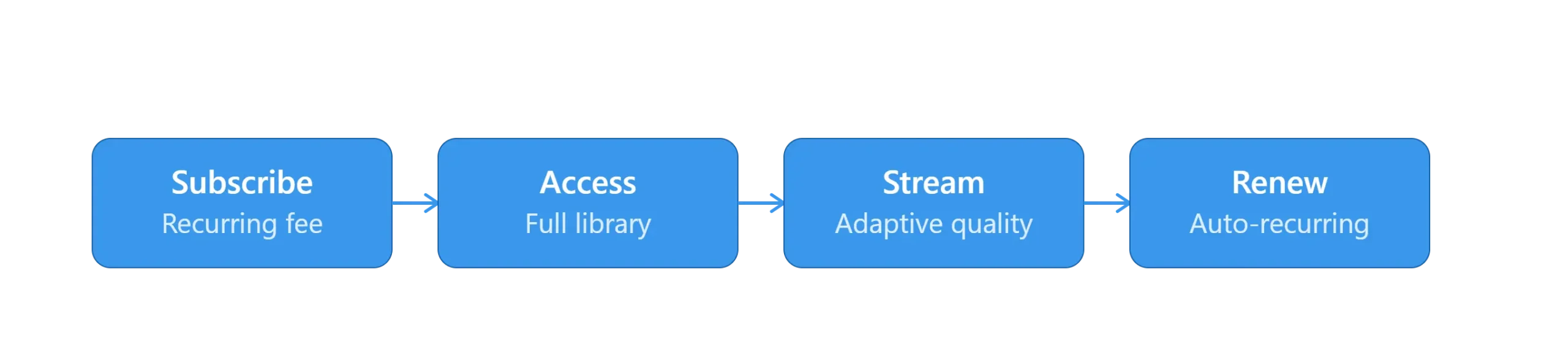
Diagram showing how SVOD works: subscribe, access, stream, and renew

The core mechanics:

  • Recurring billing — A monthly or annual charge runs automatically until the subscriber cancels.
  • Library access — Subscribers get access to the full catalog (or a tier of it), not individual purchases.
  • Ad-free by default — Most SVOD services are ad-free, though hybrid ad-supported tiers have become common alongside premium ad-free ones.
  • Cancel anytime (usually) — Most SVOD platforms avoid long-term contracts, relying on ongoing value to retain subscribers rather than lock-in.

SVOD vs. AVOD vs. TVOD — What’s the Difference?

These are the three core video monetization models, and the difference comes down to how the viewer pays:
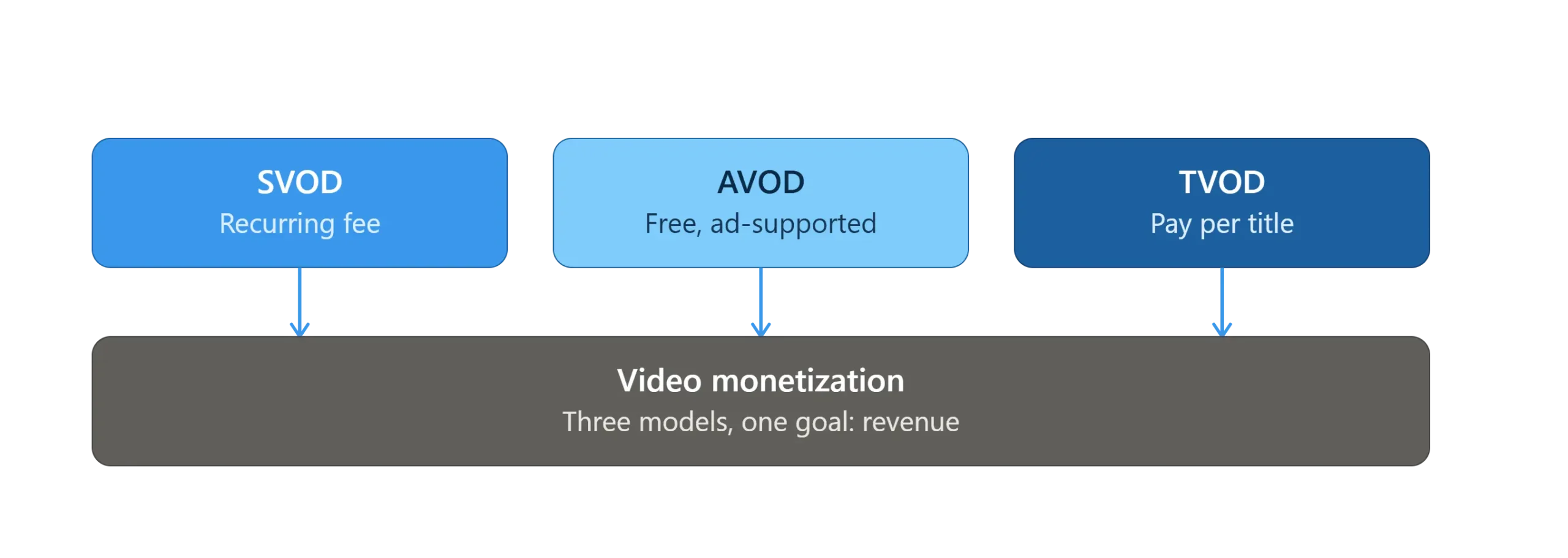
Comparison of SVOD, AVOD, and TVOD video monetization models

  • SVOD (Subscription Video on Demand) — Recurring fee for ongoing access to a library. Predictable revenue for the business, unlimited viewing for the subscriber.
  • AVOD (Advertising Video on Demand) — Free or low-cost access, monetized through ads shown before, during, or after content. Lower barrier to entry for viewers, revenue tied to ad impressions.
  • TVOD (Transactional Video on Demand) — Viewers pay per title, either to rent or own. No recurring commitment, works well for one-off premium content like events or new releases.

Many platforms now blend these — an SVOD base with an ad-supported tier, or SVOD content alongside TVOD rentals for premium extras.

What Technology Powers an SVOD Platform?

An SVOD platform runs on three technical layers working together: content protection, adaptive streaming delivery, and subscription/billing management. Get any one wrong and the business model breaks down, regardless of how good the content is.

  • Content protection — Since subscribers are paying for exclusive access, protecting that content from piracy and credential sharing matters. This is where DRM comes in — encrypting video and controlling playback so paying subscribers can watch, but downloads and redistribution are blocked.
  • Adaptive streaming delivery — Subscribers expect smooth playback across phones, laptops, smart TVs, and spotty connections. This runs on HLS and M3U8 playlists, which deliver video in adaptive quality segments rather than one large file.
  • Subscription and billing infrastructure — Recurring payments, plan tiers, trial periods, and churn management sit on top of the video layer, tying access rights to an active subscription.

Why Businesses Choose the SVOD Model

SVOD appeals to businesses because it turns one-time buyers into recurring, predictable revenue — instead of chasing a new sale for every piece of content, the business earns from the relationship as long as the subscriber stays.

This shows up differently depending on the business:

  • Course creators and coaches running a membership model, with new content released to keep subscribers engaged month over month.
  • Premium publishers offering exclusive, subscriber-only content instead of one-off article or video sales.
  • Enterprises running internal training portals where employees get ongoing access rather than one-time course purchases.

Common Use Cases for SVOD

  • Course and coaching membership sites — Ongoing access to a growing content library instead of single-purchase courses.
  • Premium publisher subscriptions — Exclusive video content behind a recurring paywall.
  • Enterprise training portals — Continuous employee access to training libraries.
  • Niche and community streaming — Fitness, education, or hobby-specific content built around a loyal subscriber base.

How to Launch an SVOD Platform

Launching an SVOD platform comes down to combining secure video hosting, adaptive delivery, and subscription billing — without building all three from scratch.

  1. Choose a video hosting platform that handles DRM protection and adaptive HLS delivery out of the box.
  2. Build your content library and organize it into the access tiers your subscription plans will offer.
  3. Set up recurring billing with trial periods, plan tiers, and cancellation handling.
  4. Gate access by subscription status, so playback only works for active subscribers.
  5. Launch and monitor churn, refining content and pricing based on what keeps subscribers active.

If you’re planning the platform build itself, our walkthrough on creating a video hosting platform covers the underlying infrastructure decisions in more depth.

FAQs

VOD (video on demand) is the general category of watching content whenever you want, rather than at a scheduled broadcast time. SVOD is one specific monetization model within VOD — the one funded by recurring subscriptions rather than ads or per-title purchases.

Some SVOD platforms offer offline downloads, but they’re typically restricted through DRM so the download only plays inside the platform’s app and expires or becomes unusable if the subscription lapses.

Not strictly, but most benefit from it. Subscribers are paying specifically for access that others don’t have, which makes that content a common piracy target — DRM is how platforms keep that access exclusive.

A paywall can be a one-time purchase or a subscription. SVOD specifically refers to the subscription version — recurring payment for ongoing access — rather than a single payment unlocking permanent access.

Yes. Many platforms run a hybrid model — an SVOD base subscription alongside AVOD ad-supported tiers or TVOD rentals for premium one-off content, which is increasingly common as platforms look to expand their audience.

Ready to launch a protected, adaptive SVOD platform? Start a free 30-day trial and get DRM and HLS streaming running on day one.

This article is for general informational purposes only, not legal or financial advice. Subscription, DRM, and streaming regulations vary by jurisdiction — consult a qualified professional for guidance specific to your business. Technical details reflect current standards and may change over time.

Comments are closed.